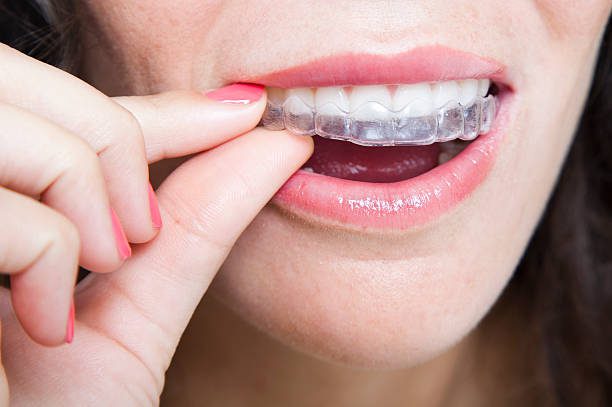
Maybe your dentist mentioned rubber bands at your consultation, or a small bag of them arrived with your latest aligners. Either way, you’re probably wondering why you need them. Invisalign elastics have one specific job: helping adjust how your upper and lower teeth meet. This guide explains how they work, how to wear them, and what to expect during Invisalign treatment in Charlotte.
What Are Invisalign Elastics and Why Are They Used?
Invisalign elastics are small orthodontic rubber bands that connect to specific points on your aligners or teeth. They add a pulling force that aligners alone may not deliver as effectively. Most often, they run between the upper and lower arches to help shift how your bite fits together, while the aligners guide individual teeth.
Straightening teeth and correcting a bite are related, but they aren’t the same goal. Alignment is about where each tooth sits within its own arch. Bite correction is about how the two arches meet when you close your mouth.
Aligners handle much of the alignment work on their own. Some bite changes, though, need a force that spans both arches. Orthodontists call this an interarch force, and creating it is the main reason elastics are added to a clear aligner plan.
How Are Invisalign Rubber Bands Different from Traditional Braces Elastics?
Both types do the same basic job of delivering a steady orthodontic force. The difference is how they attach.
With traditional braces, elastics hook onto brackets or small hooks on the wire. With Invisalign, elastics may connect to precision cuts trimmed into the aligner edge or to small buttons bonded to the teeth. Which one you’d have depends on your treatment design. Many Invisalign patients never need either.
Does Everyone Who Gets Invisalign Need Rubber Bands?
No. Many patients complete treatment with aligners alone.
Whether you need Invisalign rubber bands depends on three things: your bite relationship, the specific tooth movements planned, and your overall treatment plan. Some cases use aligners only. Others add attachments, elastics, or other auxiliaries. In some plans, elastics begin partway through treatment rather than on day one.
How Do Invisalign Elastics Move Teeth and Adjust Bite Alignment?
Teeth move when they receive gentle, consistent pressure over time. The bone around each root gradually remodels in response. You can read more about that process in our guide to how Invisalign moves teeth.
Elastics add to that process with a few key concepts:
- Interarch force: A pull between the upper and lower arches. This is what lets elastics influence how your bite comes together.
- Anchorage: The teeth or points that are meant to hold steady. Good anchorage keeps the force working on the teeth that are supposed to move.
- Force direction: The angle of the pull. It depends entirely on where the elastic attaches at each end.
Think of the aligners and elastics as a team. The aligners coordinate the position of each tooth. The elastics help guide the relationship between the two arches.
How Do Rubber Bands Apply Force Between the Upper and Lower Teeth?
A stretched elastic wants to return to its resting size. That tension pulls its two connection points toward each other. Over time, the steady pull encourages the attached teeth to shift in the planned direction.
For example, one common configuration runs from a point near an upper canine to a point near a lower molar. This is only an illustration, not a standard setup. Your provider chooses the attachment points, elastic size, and strength based on your planned correction. Even a small change in placement can change the direction of force. That’s why following your elastic diagram exactly matters.
How Do Elastics Work Together with Invisalign Attachments?
Elastics often appear alongside other small components, and each one has a different job:
| Component | What It Does |
| Composite attachment | A small tooth-colored shape bonded to a tooth. It gives the aligner extra grip to guide specific movements. It doesn’t hold elastics. |
| Elastic button | A small anchor bonded to a tooth, either tooth-colored or metal. The elastic hooks onto it, usually through a cutout in the aligner. |
| Precision cut | A notch or hook trimmed into the edge of the aligner. The elastic hooks directly onto the aligner itself. |
A treatment plan may use one, two, or all three. They aren’t interchangeable, but they can support each other. For example, attachments can help keep the aligner firmly seated while elastics pull on it. If you’d like a closer look at the first one, our patient guide explains Invisalign attachments in detail.
Can Invisalign Elastics Move the Jaw Itself?
Elastics primarily influence the teeth and how they meet. In adults, the jawbones have finished growing, so elastics shouldn’t be expected to reposition them structurally.
Instead, bite improvements come from moving teeth. This is called dental compensation. The teeth shift to meet more evenly, even though the jaws themselves stay the same size and position.
Growing patients are a different situation and are evaluated on their own terms. When a bite problem comes mainly from a significant jaw size or position difference, other treatment may be needed. That sometimes involves a specialist.
Which Bite Problems May Require Invisalign Elastics?
Malocclusion is the clinical term for a bite that doesn’t fit together as it should. Elastic use is planned around what the force needs to accomplish. The examples below show why elastics may be prescribed. They aren’t a full guide to each condition.
Why Are Elastics Used for Some Overbite or Class II Bite Corrections?
These two terms often get mixed up. An overbite describes how far the upper front teeth vertically overlap the lower front teeth. A Class II relationship describes a front-to-back difference, where the lower teeth sit farther back than the upper teeth.
A person can have one without the other. Class II elastics may help shift the teeth so the arches meet in a better front-to-back position. They can assist with particular tooth movements, but they don’t correct every Class II problem, especially when the jaw structure itself is the main cause.
Can Invisalign Elastics Help with Underbite or Class III Relationships?
In a Class III relationship, often described as an underbite, the lower teeth sit forward of the upper teeth. Class III elastics typically pull in the opposite direction from Class II elastics.
In selected cases, they may support dental correction by adjusting tooth positions. This differs from skeletal correction, which changes the jaws themselves. A significant skeletal underbite may need treatment beyond aligners and elastics.
Are Rubber Bands Used for Crossbite Correction?
A crossbite happens when some upper teeth sit inside the lower teeth when you bite down. Elastics may assist in selected crossbite cases. These are sometimes called cross elastics because they connect the inner side of one tooth to the outer side of an opposing tooth.
Whether elastics help depends on which teeth are involved and what’s causing the crossbite. Some crossbites are corrected with aligner movements alone or with other methods.
How Do You Wear Rubber Bands with Invisalign?
Your treating clinician’s instructions control everything about your Invisalign rubber bands. Configuration, size, strength, and schedule all vary from patient to patient. Use the information below for general understanding, not as a replacement for your personal plan.
A few habits help most patients stay on track:
- Wash your hands before placing or removing elastics.
- Keep your elastic diagram handy until placement feels automatic.
- Carry spare elastics in your bag, car, or desk.
- Call the office before you run out, rather than waiting for your next visit.
How Many Hours a Day Should Invisalign Elastics Be Worn?
It depends on your prescription. Some patients wear elastics for most of the day along with their aligners. Others receive different instructions, such as wearing them during certain hours only.
Aligner wear time and elastic wear time are separate instructions. Please don’t adopt an elastic schedule you read about online, including the familiar 22-hour aligner guideline. Follow the schedule your dentist gives you.
Should Invisalign Rubber Bands Be Removed for Eating and Cleaning?
Usually, yes. Patients generally remove aligners to eat and drink anything other than water. Elastics attached to the aligners come off with them, and elastics attached to buttons typically come off as well.
After eating and brushing, you’ll reseat your aligners and reattach your elastics. Your provider will tell you exactly how your setup should be handled.
How Often Should Invisalign Elastics Be Changed?
Invisalign elastics gradually lose their stretch as you wear them. A worn-out band delivers less force than your plan calls for. That’s why your provider sets a replacement schedule.
Change your elastics as often as you’ve been instructed. If a band breaks or feels loose, replace it right away with a fresh one from your supply.
What Do Invisalign Elastics Feel Like During Treatment?
Most patients notice their elastics at first. New pressure in different spots is normal, and so is a short adjustment period. It helps to know which sensations are expected and which deserve a call.
Common and expected:
- Mild pressure or tightness where the elastics pull
- Some tenderness when chewing during the first few days
- Noticing the bands when you talk or open wide
Call our office if you notice:
- Severe pain, worsening, or lasts well beyond the first few days
- A sore spot where an elastic or button rubs your cheek or gums
- A loose button or attachment, or an aligner that no longer fits
- Jaw joint pain, clicking with pain, or trouble opening your mouth
Do Invisalign Rubber Bands Hurt When You First Start Wearing Them?
Mild pressure or soreness can occur when you first start wearing elastics or when your configuration changes. This usually eases as your teeth adjust.
Taking elastics out to relieve soreness can make the adjustment start over each time you put them back. If pain is severe or doesn’t improve, contact your dentist for guidance.
Can Invisalign Elastics Make It Harder to Talk or Open Your Mouth?
Some patients feel the bands stretch when they talk, yawn, or open wide. It can feel a little restrictive at first. Most people adapt as they get used to the sensation, though the timing varies from person to person.
If you can’t open comfortably, or opening causes jaw pain, let your dentist know.
What Happens If You Forget to Wear Invisalign Elastics?
Everyone forgets once in a while. A single missed session rarely ruins treatment. What matters most is the overall pattern, because teeth respond best to steady, consistent force.
Can Inconsistent Elastic Wear Delay Bite Correction?
It can. When elastic force comes and goes, teeth may move less predictably. Your aligners may also stop fitting the way they were designed to.
How much delay this causes depends on your treatment plan and how often wear is missed. Consistency is one of the factors that shapes your overall Invisalign treatment timeline.
Should You Double Up on Rubber Bands to Catch Up?
No, unless your dentist specifically tells you to. Wearing two elastics where one is prescribed changes both the amount and the direction of force. Extra force doesn’t mean faster movement, and it can cause soreness or unplanned tooth movement.
Instead, return to your normal schedule. If you’ve missed several days, call the office so your dentist can decide whether anything needs to change.
How Does a Charlotte Invisalign Dentist Monitor Elastic Progress?
When elastics are part of an Invisalign plan, checkups look beyond whether your teeth seem straighter. Your Invisalign dentist in Charlotte, NC, also evaluates:
- How your upper and lower teeth meet
- Whether teeth are moving as planned
- Whether attachments and buttons are still secure
- How well your aligners are fitting
At Smile Moore Dental, Dr. Durning Moore is an Invisalign-certified dentist who reviews your progress against your individual treatment plan. When aligners don’t fit as expected, that can point to Invisalign tracking problems that may need attention.
How Can a Dentist Tell Whether the Elastics Are Working?
Your dentist looks at several signs together. These include changes in where your teeth touch, how the front and back teeth relate, and how snugly your aligners seat. Your progress is also compared with where your plan expected you to be at this stage.
If movement is slower than planned, your dentist may adjust your elastics, your aligners, or both.
When Can Patients Stop Wearing Invisalign Elastics?
Your dentist decides when the elastic phase has done its job. Some patients need elastics for only part of treatment. Others need them for longer.
Try not to stop on your own just because your bite feels better. Teeth that have just moved can drift back toward their old relationship if the force stops too early.
Frequently Asked Questions About Invisalign Rubber Bands
Can you wear Invisalign without elastics?
Yes. Many patients complete Invisalign treatment without elastics. Whether you need them depends on your bite and the corrections your treatment plan calls for.
Are Invisalign rubber bands visible?
They can be, depending on where they’re placed. Elastics connecting upper and lower teeth near the front of the mouth may show when you smile or talk. Clear and tooth-colored options are often available.
Do Invisalign elastics fix overbites?
Elastics may assist with selected bite corrections, including some overbite and Class II cases. They work alongside the aligners rather than on their own. Results depend on whether the issue comes mainly from tooth position or jaw structure.
What if an Invisalign rubber band breaks?
Replace it with a fresh elastic from your supply as soon as you can. A broken band interrupts the force your plan depends on. If you run out, call the office for more.
Can Invisalign elastics change your facial profile?
Tooth movement can influence how your teeth and smile look. Any change to your facial profile depends on many factors, including jaw structure, lips, and soft tissue. Your dentist can explain what’s realistic for your case.
What if I’m allergic to latex?
Tell your dentist before treatment begins. Non-latex orthodontic elastics are available for patients with latex sensitivity or allergy. Your dentist will make sure your elastics fit your health history.
Find Out Whether Your Invisalign Treatment Requires Elastics in Charlotte, NC
Not every patient who chooses Invisalign in Charlotte, NC, needs elastics, and the only way to know is a careful look at your bite. At Smile Moore Dental, Dr. Durning Moore evaluates your bite relationship, tooth position, and treatment goals. Those details determine whether elastics are appropriate for your plan.
If you’re considering clear aligners in Charlotte, NC, or have questions about your current treatment, we’re happy to help. Our office welcomes patients from Eastover, Cotswold, and across Charlotte. Schedule an Invisalign evaluation in Charlotte, NC, or call our office to talk with our team.
