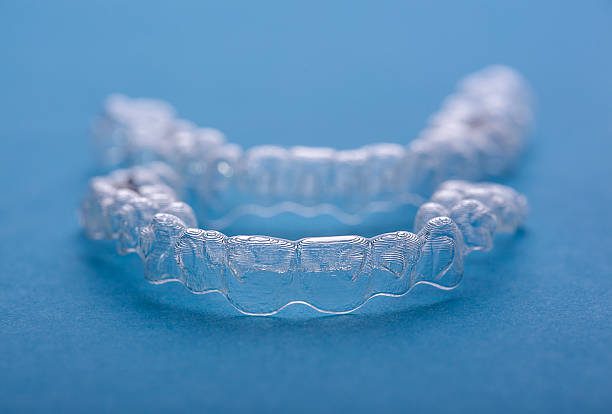
Invisalign refinements are additional sets of clear aligners. Your provider creates them when your first series of trays has improved your smile, but a few planned movements still need adjustment.
Many patients reach the end of their original aligner series with results that look close to the plan, but not quite finished. A tooth may not have rotated fully, a small space may still be open, or your bite may need a bit more settling. Sometimes the aligners have stopped tracking as planned, or the final tooth positions just need small adjustments.
Needing refinements does not mean your Invisalign treatment failed. Digital treatment planning predicts how your teeth should move, but every patient’s mouth responds a little differently. That is normal, not a sign that something went wrong.
At this stage, your provider typically reassesses your teeth, takes a new digital scan, and compares your current results with the original plan. From there, they can prescribe another series of aligners designed around your actual progress.
This guide explains why refinements happen, how they are planned, and how much time the finishing phase may add. It also covers what to expect once your Invisalign treatment in Charlotte, NC, is complete and retainers come into the picture.
What Are Invisalign Refinements?
Invisalign refinements are a set of additional aligner trays prescribed after your provider reviews the results of your first aligner series. They are not a restart. They build on the progress you have already made.
Refinement trays differ from a few other things patients sometimes confuse them with. A replacement tray is simply a copy of a lost or damaged aligner. Restarting treatment means beginning a new plan from scratch, and a completely new orthodontic treatment addresses a different concern outside your original plan altogether. Retainers come after refinements, once active movement is finished. Refinements sit in between these, targeting only what remains.
Unlike your original trays, refinement aligners are based on where your teeth actually are right now. Your provider does not just continue the old sequence. They create a new digital plan using your current tooth positions, then design an Invisalign finishing phase around that data.
Are Invisalign Refinements the Same as Extra Trays?
Patients often call refinements “extra trays,” and that is close enough for everyday conversation. But refinement aligners are more specific than the term suggests.
Extra Invisalign trays, in the clinical sense, are newly planned. They follow a reassessment of your teeth, not a simple continuation of the original series. Refinement aligners target the specific movements that remain, using updated measurements rather than repeating earlier trays.
Do Refinements Mean Invisalign Did Not Work?
Not necessarily. In most cases, your first aligner series accomplishes the majority of planned movement. A smaller number of teeth may respond differently.
Several factors can contribute to this. Biological variation between patients plays a role, as does the complexity of certain movements. Wear time, tooth shape, root position, and how your bite settles can all affect the final result. Refinements are not automatic for every patient, and they are not always avoidable when they are needed. They simply reflect the reality that treatment planning predicts movement, while your body determines how that movement actually happens.
Why Do Some Teeth Need Additional Invisalign Aligners?
Refinement needs usually come from a mix of factors rather than one single cause. Biological response, movement complexity, and treatment-finishing requirements like root position or bite can all interact.
Some Teeth Move Differently Than the Digital Plan Predicts
Digital treatment planning software models how your teeth should move based on the force each aligner applies. That plan is a prediction, not a guarantee.
Your teeth move within living tissue, connected to the jawbone by the periodontal ligament. As pressure is applied, bone remodels around the tooth root to allow movement. This biological process varies from person to person, which means some teeth reach their planned position faster than others.
Rotated Teeth May Need More Finishing Movement
Rotation is often more mechanically demanding than straightforward tilting or tipping. Round-shaped teeth, like premolars, can be harder for an aligner to grip firmly during rotation.
Attachments, the small tooth-colored shapes bonded to certain teeth, help aligners apply more targeted rotational force. Even with attachments in place, some rotation may not fully resolve within the first series, leaving residual rotation that a refinement stage can address.
Root Position May Need Further Correction Even When Teeth Look Straight
Crown alignment and root alignment are not always the same thing. The visible part of your tooth can look straight while the root beneath the gumline has not fully reached its ideal root position.
True bodily tooth movement means the whole tooth, including the root, shifts into its final tooth position. That process takes longer to achieve than simply tipping the crown. Refinements sometimes focus specifically on root control rather than visible alignment alone.
The Bite May Need Further Adjustment After Teeth Look Straighter
A straighter smile does not automatically mean your bite has finished settling. Your provider also evaluates how your upper and lower teeth meet, since even alignment can leave uneven contacts or pressure points.
Occlusion, or how your teeth come together when you bite, affects long-term comfort and function. Uneven contacts can concentrate force distribution on just a few teeth instead of spreading it evenly across your bite. Patients interested in how Invisalign can influence bite alignment can find more detail on this connection. Refinements give your provider a chance to fine-tune these finishing contacts before treatment is considered complete.
What Does It Mean When Invisalign Is Not Tracking Properly?
Tracking describes the relationship between your planned tooth position, your actual tooth position, and how closely each aligner fits. When trays track well, they should seat snugly against your teeth and any attachments.
When tracking falls behind the sequence, an aligner may not seat fully. This is worth mentioning to your provider rather than trying to diagnose on your own, since several different factors can cause it.
Why Can Gaps Appear Between the Aligner and the Tooth?
A visible gap between an aligner and a tooth can come from several sources. Movement may be incomplete, a rotation may be more difficult than expected, or the tray may not have been fully seated over the teeth to begin with.
Wear time falling short of the recommended hours can also play a role, as can a damaged or distorted aligner. A visible gap does not automatically mean you need refinements. It simply signals that your provider should take a closer look at your progress.
Can Poor Aligner Wear Lead to Refinements?
Consistent wear supports the planned pace of movement. When trays come out too often, or get replaced before teeth are ready to move to the next stage, tracking can fall behind.
This is one possible contributing factor among several, not a reason for blame. Many patients who wear their aligners diligently still need refinements due to biological variation or movement complexity.
Can Attachments Help Correct Tracking Problems?
Attachments can improve force control for certain movements, particularly rotations and more complex repositioning. They give the aligner more surface area to grip.
An attachment is not a universal fix, though. Some tracking issues respond well to attachment adjustments, while others require a full reassessment and a new digital plan.
How Does an Invisalign Provider Decide Whether You Need Refinements?
Your Invisalign provider in Charlotte, NC, evaluates several factors together rather than relying on a single measurement. This clinical reassessment looks at your current tooth position, remaining spaces, rotation, root position, bite, aligner fit, and how well any attachments are functioning. An Invisalign dentist in Charlotte, NC, also weighs this progress against your original treatment goals before deciding whether refinements make sense.
Visual and Clinical Evaluation of Tooth Position
Your dentist compares your actual results with your original treatment goals. They check alignment, tooth contacts, spacing, rotation, and symmetry to see how closely your smile matches the plan.
Bite Evaluation Before the Finishing Phase
Bite evaluation looks at your bite contacts, or how your upper and lower teeth meet, and whether that occlusion feels stable. This step supports functional alignment and long-term bite stability, not just appearance. No provider can promise a perfect bite, but this evaluation helps identify what still needs attention before finishing.
Digital Rescanning for a New Invisalign Treatment Plan
An Invisalign rescan captures your current tooth positions with the same digital scanning technology used at the start of treatment. This updated data replaces the assumptions built into your original treatment plan.
From there, your provider can digitally stage the remaining movements. New aligners are then fabricated based on where your teeth are today, not where the original plan assumed they would be.
What Happens During the Invisalign Refinement Process?
The refinement process follows a fairly consistent sequence, though the number of aligners and total time varies by case.
Step 1: Your Teeth and Bite Are Re-Evaluated
Your provider checks alignment, spacing, rotation, root position, and bite contacts to determine what still needs to move.
Step 2: A New Digital Scan Captures Your Current Tooth Positions
This scan becomes the starting point for your refinement plan. It reflects your actual progress rather than the original prediction.
Step 3: Remaining Tooth Movements Are Replanned
Your provider maps out the specific finishing movements needed. This can involve minor rotation, a small residual gap, root alignment, tooth inclination, or bite contact adjustments.
Step 4: New Refinement Aligners Are Worn in Sequence
Refinement aligners work the same way your original trays did. You wear each one in order, and they apply gentle pressure toward your updated treatment goal.
Will Invisalign Attachments Change During Refinements?
Your attachment plan may shift once refinements begin. Some existing attachments stay in place because they are still needed. Others may be removed if their job is finished, and new ones may be added for movements that the original plan did not fully anticipate. In some cases, an existing attachment’s shape or position may simply be adjusted rather than replaced. Each change connects back to the specific movements that your refinement plan still needs to complete.
Why Might New Attachments Be Added During Refinements?
New attachments can provide additional rotation control and force for finishing movements, including small extrusion adjustments or added root movement. Adding an attachment mid-treatment is not unusual when a specific movement needs more precision.
Why Might Some Attachments Be Removed Before Treatment Is Finished?
Attachments are movement-specific, meaning each one supports a particular type of tooth motion. Once that motion is complete, the attachment may no longer serve a purpose and can be removed.
How Long Do Invisalign Refinements Take?
There is no universal timeframe for refinements, since duration depends on several variables working together. The number of remaining movements and how complex they are both play a role. So does the number of refinement aligners needed, how consistently they are worn, and each patient’s biological response to treatment.
This is separate from how long Invisalign treatment typically takes overall, which covers the full course of treatment from start to finish. Refinement duration specifically covers this finishing stage.
Can Refinements Add Time to Invisalign Treatment?
Yes, refinements can extend your overall treatment timeline. This additional time is not necessarily a setback. It often allows your provider to improve final alignment, bite stability, root position, or space closure before finishing.
Can a Patient Need More Than One Refinement Series?
Some cases require more than one round of reassessment. This is not common for every patient, but it can happen when finishing movements are more involved. Treatment is considered complete based on your clinical outcome, not a fixed number of aligner series.
Can Invisalign Refinements Close Small Remaining Gaps?
Small residual spacing is one of the more common reasons refinements are prescribed. A gap that seemed nearly closed at the end of the original series can sometimes benefit from a bit more targeted movement.
Refinement aligners can continue working on space closure, tooth contact, tooth position, and related root alignment. Patients specifically interested in Invisalign’s approach to closing gaps between teeth can find a deeper explanation of how clear aligners handle spacing overall.
Why Can a Gap Remain Even After Teeth Look Straighter?
A few contextual factors can leave a small gap in place. Movement toward full closure may have been incomplete, or tooth shape can affect how contacts meet. Root positions sometimes diverge slightly even when crowns look aligned, and in some cases the finishing position simply needs a bit more refinement. None of these situations are unusual, and a refinement stage is generally built to address them.
What Happens After Invisalign Refinements Are Finished?
Once refinements are complete, active tooth movement comes to an end and treatment shifts into orthodontic retention. Your provider performs a final evaluation, removes any remaining attachments if appropriate, and transitions you into wearing Invisalign retainers. From there, consistent retainer wear supports maintaining tooth position for the long term.
How Does the Dentist Decide Treatment Is Complete?
Completion is based on multiple criteria working together, not appearance alone. Your provider looks at alignment, spacing, tooth position, bite stability, and whether your original treatment goals and concerns have been addressed.
Why Are Retainers Needed After Refinements?
Teeth can shift after active orthodontic movement stops, since the periodontal ligament and surrounding bone continue adjusting for a period afterward. Retainers hold your teeth in their new positions while that stabilization happens, supporting long-term retention of your finished results.
Skipping or reducing retainer wear too early can allow teeth to drift from their finished position, which is why most providers recommend consistent wear, especially in the months right after active treatment ends.
FAQs About Invisalign Refinements in Charlotte, NC
What are Invisalign refinements?
Invisalign refinements are additional aligner stages created after your provider reassesses the results of your first tray series. They target tooth movements that remain unfinished and typically occur before your retention phase begins.
Do Invisalign refinements mean treatment failed?
Not necessarily. Tooth movement varies based on each patient’s biological response, and a digital treatment plan can only predict movement rather than guarantee an identical outcome for everyone. A clinical reassessment simply identifies what movement remains.
Why do I need more Invisalign trays?
Additional aligners are usually prescribed to correct residual tooth movement that your first series did not fully complete. This can include leftover rotation, small spacing, or bite adjustments identified during your reassessment.
Do I need another scan for Invisalign refinements?
Yes, a digital rescan is a standard part of the refinement process. It records your current tooth position, giving your provider the accurate, up-to-date information needed to build your refinement plan.
How long do Invisalign refinements take?
Refinement duration depends on how much movement remains and how complex that movement is. Consistent aligner wear and your individual clinical response both influence how quickly the finishing phase progresses.
Can Invisalign refinements fix the bite?
Refinement aligners can target certain bite relationships as part of the finishing phase. Whether bite refinement is included depends on your specific treatment plan, and your provider evaluates bite contacts as part of the final assessment.
Complete Your Invisalign Treatment with Personalized Refinement Planning in Charlotte, NC
Whether you are finishing an aligner series or just starting to consider Invisalign in Charlotte, NC, it helps to understand how tooth movement is monitored throughout treatment. Knowing what to expect can set realistic expectations from the start. At Smile Moore Dental, an Invisalign evaluation includes digital scanning, ongoing treatment monitoring, and refinements when clinically appropriate, so your finishing phase reflects where your teeth actually are.
If you are wondering whether you need additional aligners, our team is glad to walk you through what to expect. The same is true if you are researching an Invisalign dentist in Charlotte, NC, for the first time. You can schedule a visit with our Charlotte team to discuss your Invisalign treatment in Charlotte, or call our office directly to speak with our team about your next steps.
