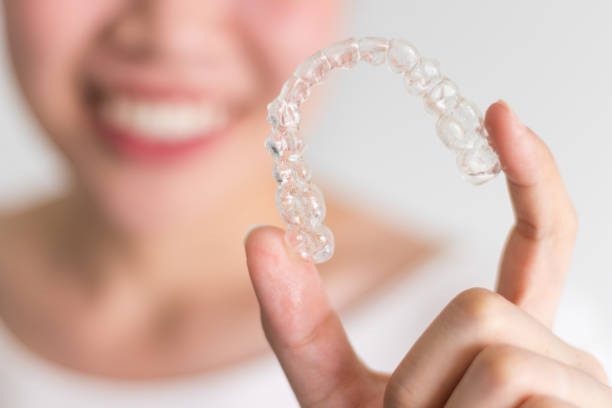
Invisalign can sometimes make a smile appear wider. This happens when treatment changes the position and angle of teeth within the dental arch, particularly the premolars and other posterior teeth. This kind of change is a form of dental expansion, not skeletal expansion, since it works with tooth position rather than the jawbone itself.
Some patients notice a fuller, broader smile partway through Invisalign treatment in Charlotte, NC. As dental arch width shifts, more tooth structure becomes visible. This can reduce dark spaces at the corners of the smile and improve overall smile width and balance.
Invisalign does not automatically widen every smile. Any movement has to stay within biological limits. Bone width, gum health, and bite relationships all play a role in how much a dental arch can safely change. Widening should always be treatment-driven, guided by what the teeth and supporting tissue can handle, not chosen for cosmetic reasons alone.
This article explains what arch expansion means, how clear aligners influence posterior tooth position, which teeth are involved, and where treatment limits apply. It also covers how digital treatment planning helps map out a realistic, healthy outcome for your smile.
What Does It Mean to “Widen Your Smile” with Invisalign?
Patients use the phrase “widen my smile” to describe several different things. Some want to see more teeth when they smile. Others mean reducing the dark spaces near the corners of the mouth. Some are asking about a broader dental arch appearance, a change in posterior tooth position, or a shift in overall arch form.
These ideas describe how a smile looks, not necessarily what is happening underneath it. A wider smile, a broad smile appearance, or a change in smile width can come from several sources. Tooth position, dental arch width, and arch form can each play a part, sometimes together. Understanding the difference between visual perception and actual tooth movement helps set realistic expectations before treatment starts.
What Are Smile Corridors?
Smile corridors are the darker spaces that show up between the side teeth and the corners of the mouth during a smile. They are a normal part of most smiles, and their size varies from person to person.
Several things influence how visible smile corridors appear, including:
- Dental arch form
- Tooth position and angle
- Lip shape and movement
- Tooth size
- Overall facial proportions
Invisalign does not automatically eliminate smile corridors. In some cases, treatment can reduce how noticeable they are, but the result depends on individual anatomy.
Does a Wider Dental Arch Always Create a Wider-Looking Smile?
Not necessarily. Arch width is only one factor in how wide a smile looks. Other variables carry just as much weight, including:
- Lip width and how much the lips move when smiling
- The size and shape of individual teeth
- How much gum tissue shows above the teeth
- Facial structure and proportions
- The angle at which teeth sit in the arch
A wider dental arch can support a fuller smile, but it is not the only piece of the puzzle.
How Can Invisalign Change Dental Arch Width?
Clear aligners apply gentle, controlled force to selected teeth over time. This force can shift certain posterior teeth outward within the dental arch, changing the arch’s overall form.
This process involves transverse and buccal movement, along with changes in tooth inclination. When several teeth move together in a coordinated way, the shape of the arch can change gradually. This differs from physically stretching the underlying jawbone, which clear aligners are not designed to do.
Orthodontic appliances, including aligners, work by applying steady pressure that guides teeth into a healthier position over time, according to the American Dental Association.
How Do Clear Aligners Move Premolars and Molars Outward?
Premolars and molars sit toward the back and sides of the dental arch. Aligners can apply transverse force to these teeth, gradually tipping or moving them outward.
This buccal movement changes the tooth’s position and angle within its supporting bone. The amount of movement possible depends on the individual tooth, the surrounding bone, and how the aligner sequence is designed. Dr. Moore evaluates each patient’s Invisalign plan individually to determine what movement is realistic for their smile.
Is Invisalign Expansion Mostly Tooth Movement or Jawbone Expansion?
In adult clear aligner treatment, most of the visible widening effect generally comes from changing tooth position and inclination within the existing bone. It is not typically the result of a major increase in the width of the jawbone itself.
This distinction matters. Dental expansion and dentoalveolar expansion refer to tooth movement and changes in tooth position. Skeletal expansion refers to a change in the underlying jaw structure and arch width at a skeletal level, which works differently and is not the primary mechanism behind Invisalign arch changes.
What Is the Difference Between Dental Expansion and Skeletal Expansion?
This distinction is one of the most important ideas in this article. Dental expansion and skeletal expansion are not the same process, even though both can affect how wide a smile looks.
| Dental Expansion | Skeletal Expansion |
|---|---|
| Changes tooth position within the arch | Changes the width of the underlying jawbone |
| Changes tooth inclination or angle | May involve growth modification or dedicated expansion appliances |
| Modifies dental arch form | Represents a separate orthodontic treatment concept |
| Occurs within existing periodontal and bone limits | Typically evaluated at a different stage of dental development |
Invisalign is generally associated with dental expansion, not skeletal expansion. Whether any expansion is appropriate depends on an individual evaluation.
What Is Dentoalveolar Expansion?
Dentoalveolar expansion describes the movement of teeth, along with the bone and tissue that directly support them, within biological limits. This is one form of dental arch expansion, and it relies on transverse tooth movement rather than a change in the jaw itself. In plain terms, it means the tooth and the bone immediately around it shift together as the tooth moves.
This is different from expanding the broader jaw structure. Posterior expansion in particular tends to happen this way, working within the existing framework of the mouth rather than changing that framework itself.
Can Invisalign Expand the Actual Jawbone?
Clear aligners primarily reposition teeth and influence the relationship between teeth and their supporting bone. They are not generally designed to expand the jawbone itself.
True skeletal widening is a separate biological and orthodontic concept. Age, growth status, and treatment goals all affect what type of expansion, if any, might be considered for a given patient. A thorough exam is the only way to know which category applies to a specific smile.
Which Teeth Usually Influence Smile Width the Most?
Posterior teeth, including premolars, canines, and molars, play the biggest role in how wide a smile appears. Their position shapes posterior arch form, which affects both smile corridors and overall smile fullness.
Dr. Moore plans widening across the whole arch rather than moving one isolated tooth outward on its own. Coordinated movement helps keep the bite and arch form stable.
Why Are Premolars Important for a Wider-Looking Smile?
Premolars sit close to the corners of the smile, where they are easy to see when someone smiles widely. Premolar position has a direct effect on perceived smile fullness, posterior smile width, and arch form.
Small changes in premolar position can noticeably affect how full or narrow a smile corridor looks.
Do Molars Affect the Shape of the Dental Arch?
Molars sit further back and contribute more to the posterior arch form and bite relationship than to direct cosmetic appearance. Their position still matters for treatment planning, even though they are less visible during a smile.
Can Invisalign Widen a Narrow Dental Arch?
The answer depends on the individual. Some narrow dental arches can be modified through clear aligner treatment, while others cannot be safely changed to the same degree.
Several factors determine what is possible, including:
- Current tooth position
- Existing tooth inclination
- Available bone width
- Periodontal support
- Bite relationship
- Patient age
- Overall treatment goals
Not every narrow-looking arch is a good candidate for expansion. A digital evaluation helps determine what is realistic for a specific smile.
How Does Tooth Inclination Affect Arch Width?
A tooth’s crown can appear further outward when its angle changes, even without much movement at the root. This is called tipping.
Tipping is different from bodily movement, where the whole tooth, including the root, shifts together. Root control affects how stable and healthy the result is over time. Dr. Moore accounts for this difference when planning treatment.
Why Does Root Position Matter During Expansion?
Moving a crown outward without proper root control can create limitations. If the root does not move along with the crown, the tooth may end up poorly supported.
This is why root support, alveolar bone, periodontal health, and overall movement control all factor into how much movement is safe. Specific safe distances vary by patient and are not something that can be generalized.
How Does Bone and Gum Support Limit Invisalign Expansion?
Every tooth needs healthy alveolar bone and adequate periodontal support to stay stable. Dr. Moore cannot plan outward movement without considering this surrounding support.
Bone support and gum health set natural tooth movement limits on how far a tooth can safely move. This is one reason treatment planning is individualized rather than one-size-fits-all.
Why Can Moving Teeth Too Far Outward Be a Problem?
Moving a tooth beyond its supporting bone can reduce bone support around the root and compromise periodontal support. In some cases, this may contribute to gum recession or leave the tooth in a less stable position.
These outcomes are not inevitable, and most Invisalign treatment stays well within safe limits. Dr. Moore plans and monitors treatment carefully to avoid pushing movement past what the supporting tissue can handle.
Why Should Gum Recession Be Evaluated Before Arch Expansion?
Thin gum tissue or existing recession can influence how much movement is appropriate for a given tooth. This is something Dr. Moore looks for during an initial evaluation, since it can shape the treatment plan from the start.
This is informational rather than diagnostic. Only an in-person exam can determine whether recession is present and how it should factor into treatment.
Can Invisalign Arch Expansion Help Create Space for Teeth?
Changes in arch form can sometimes contribute to space creation within the dental arch, giving crowded teeth more available arch space for proper tooth alignment. This is a secondary benefit of treatment planning rather than the main goal of arch-form changes.
The same underlying mechanism, repositioning teeth to change how much space is available, also applies when clear aligners close space between teeth, even though that situation starts from the opposite problem.
Is Expansion the Same as Fixing Crowded Teeth?
No. Crowding reflects the relationship between tooth size, the space available in the arch, and where each tooth ends up positioned. Expansion is only one possible piece of managing that relationship, not a direct substitute for it.
What Other Methods Can Be Used to Manage Space During Invisalign?
Space management during Invisalign treatment can involve several approaches, including:
- Repositioning teeth within the existing arch
- Redistributing available space across several teeth
- Interproximal reduction, when appropriate for the case
- Careful sequencing of tooth movement over time
These decisions are made individually by Dr. Moore based on each patient’s scans and treatment goals. They are not something to plan on your own.
Can Invisalign Expansion Change Your Bite?
Transverse tooth movement affects how the upper and lower teeth meet. This means arch-form changes are not purely cosmetic. They can influence occlusion, posterior contacts, cross-arch coordination, and overall bite stability.
Patients curious about the connection between aligner treatment and bite function can learn more about how Invisalign can influence bite alignment in a related discussion of bite correction.
Why Must the Upper and Lower Arches Be Planned Together?
The upper dental arch and lower dental arch function as a system. Moving teeth in one arch without considering the bite relationship and occlusal contacts of the other can affect how the bite comes together.
This is why arch coordination is such an important part of digital treatment planning, not an afterthought.
Can Arch Expansion Help with a Crossbite?
Crossbite is a related condition where upper and lower teeth do not align correctly in some part of the mouth. Whether arch expansion plays a role depends on whether the crossbite is primarily dental, primarily skeletal, or a mix of both.
This determination requires a clinical evaluation and is not something that can be assessed from general information alone.
How Is Invisalign Arch Expansion Planned Digitally?
Digital treatment planning connects directly to arch form decisions. As an experienced Invisalign provider in Charlotte, NC, Dr. Moore uses intraoral scans to map out current tooth positions before any movement is planned.
These scans capture arch measurements, bite relationships, and existing tooth positions. From there, Dr. Moore builds a planned sequence of movement around root control and a realistic final arch form. Patients considering an Invisalign dentist in Charlotte, NC for arch-related concerns can expect this kind of detailed planning before treatment begins.
What Does a Digital Invisalign Scan Show About Arch Form?
A digital scan shows current tooth positions, arch shape, spacing or crowding patterns, bite relationships, and overall symmetry. It gives a clear starting picture for treatment planning.
A scan alone does not show every biological limitation, such as underlying bone density or gum health in detail. Dr. Moore evaluates these factors alongside the scan during a clinical exam.
How Is the Final Smile Width Planned?
Dr. Moore plans a final smile width around more than a cosmetic target. Tooth position, bite function, periodontal limits, and facial proportions all factor into the plan, along with the patient’s smile goals.
This comprehensive approach is part of why Invisalign treatment in Charlotte works best with an experienced provider. A purely cosmetic checklist cannot account for these anatomical limits.
Do Invisalign Attachments Help with Arch Expansion?
Attachments are small, tooth-colored shapes bonded to certain teeth during treatment. They provide additional anchorage and root control when a tooth needs more precise posterior movement than the aligner alone can achieve.
Why Might Posterior Teeth Need Attachments During Expansion?
Posterior teeth sometimes need extra grip and anchorage for the aligner to apply consistent, controlled force. Attachments improve aligner engagement by giving the tray something more secure to hold onto during movement.
Not every case requires attachments. Dr. Moore decides whether they’re needed based on the specific movement each tooth requires.
Can Invisalign Make Your Smile Look Fuller Without Making the Jaw Wider?
Yes, in many cases. Visual smile fullness can change when posterior teeth become more visible, arch form shifts slightly, tooth inclination changes, or smile corridors become less pronounced.
This is the central distinction to remember: a fuller-looking smile does not require a wider jawbone. Most of the visible change comes from tooth position and inclination, not from skeletal growth or expansion.
Can Invisalign Reduce Dark Spaces at the Corners of the Smile?
In some cases, changes in arch form can improve smile fullness and reduce how visible buccal corridors appear, increasing visible tooth display along the sides of the smile. This is not guaranteed for every patient, since smile corridors are also shaped by lip anatomy and facial structure.
Who May Be a Candidate for Invisalign Arch Expansion?
Candidacy depends on a combination of factors rather than a fixed checklist. Dr. Moore typically evaluates:
- Current arch form
- Existing tooth inclination
- Bone support in the areas being considered for movement
- Gum health
- Bite relationship
- Patient age
- Overall treatment goals
A consultation and digital scan are the only reliable ways for Dr. Moore to determine what is realistic for your smile.
Can Adults Have Their Dental Arches Expanded with Invisalign?
Adults can often see changes in tooth position through adult Invisalign treatment. This falls under adult orthodontics and is different from changing skeletal jaw width, which works through a separate biological process.
The American Association of Orthodontists notes that aligners are used to shift teeth gradually into a new position over the course of treatment, an approach that applies to adult patients as much as younger ones. Adult dental expansion generally falls into the dentoalveolar movement category rather than true skeletal change.
When Might Invisalign Expansion Be Limited?
Expansion may be more limited in certain situations, including cases involving:
- Reduced periodontal support
- Thin bone in the areas being considered for movement
- A significant skeletal discrepancy
- Unstable tooth position
- More complex bite problems
These situations do not rule out treatment altogether, but they do call for careful, individualized planning.
FAQs About Invisalign and Smile Widening in Charlotte, NC
Can Invisalign make your smile wider?
Invisalign can sometimes make a smile look wider by changing the position of teeth within the dental arch. This effect depends on individual anatomy and treatment goals. Posterior tooth position plays a large role in how visible the change appears. Results vary from patient to patient.
Does Invisalign actually widen the jaw?
Invisalign primarily produces tooth movement rather than jaw widening. Dental expansion differs from skeletal expansion in both mechanism and outcome. Skeletal expansion involves an actual change in jaw width. Clear aligners modify tooth position within the existing dental arch instead.
Can Invisalign reduce smile corridors?
Smile corridors depend partly on arch form and partly on facial anatomy. Posterior tooth position can influence how visible these corridors appear. Dental expansion may alter visible smile fullness in some cases. Overall smile appearance also depends on lip shape and facial structure.
Can Invisalign expand a narrow arch?
Invisalign can modify dental arch width in some cases. Arch expansion depends heavily on the existing tooth position. It also depends on periodontal support around the teeth involved. Treatment planning evaluates these biological limits before any movement is recommended.
Is Invisalign expansion safe for gums and bone?
Orthodontic expansion requires a periodontal evaluation before treatment begins. Tooth movement depends on adequate bone support. Gum health influences how a treatment plan is designed. Professional monitoring throughout treatment supports controlled, appropriate tooth movement.
Can arch expansion help crowded teeth?
Arch expansion may contribute to space creation in some cases. Crowding reflects the relationship between tooth size and available arch space. Space creation is only one component of managing crowding. Invisalign planning determines the most appropriate movement strategy for each patient.
Find Out Whether Invisalign Can Create a Broader Smile in Charlotte, NC
A narrow-looking smile deserves a real evaluation, not guesswork. At Smile Moore Dental in Charlotte, NC, Dr. Moore reviews dental arch form, tooth position, and bite relationship before recommending any type of treatment. Gum health, bone support, and periodontal support all factor into that evaluation as well.
Digital Invisalign planning gives a clear picture of what is realistic for your smile and where the limits are. If you have been told your arch looks narrow, or you are simply curious whether clear aligners could help your smile look fuller, the best next step is a conversation grounded in your own anatomy.
Patients interested in Invisalign in Charlotte, NC, or looking for an experienced Invisalign dentist in Charlotte, NC, are welcome to schedule a consultation with Dr. Moore. This is a good opportunity to discuss whether clear aligners in Charlotte could support your smile goals.
