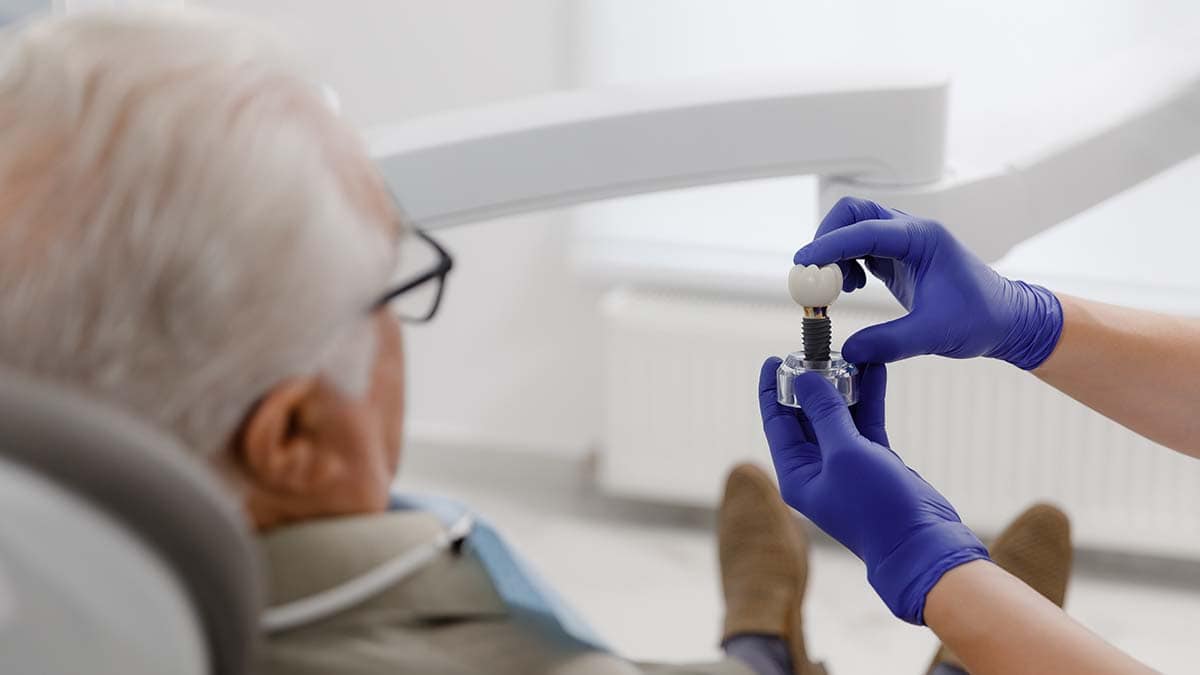
If you have lost a tooth and want to avoid future jawbone problems, here’s what you should know: Dental implants are more than a cosmetic solution. They play a vital role in protecting and preserving your jawbone’s health.
At Smile Moore Dental in Charlotte, NC, Dr. Durning Moore and his team focus on long-term oral health, not just improving the appearance of your smile. Using a patient-focused, biomimetic approach, they help restore function while preserving as much of your natural tooth and bone structure as possible. Dental implants are one of the most effective ways to maintain your jaw’s strength and stability after tooth loss.
Why Does Bone Loss Happen After Tooth Loss?
Many patients in Charlotte, NC do not realize that tooth loss affects the jawbone as much as it impacts the appearance of their smile. When a tooth is missing, the jawbone underneath no longer receives the stimulation it needs from everyday chewing and biting. Over time, this lack of stimulation causes the bone to weaken and shrink, a process known as bone resorption.
What Happens to the Jaw Without a Tooth Root
Your jaw interprets a missing tooth as unnecessary and begins breaking down the bone in that area. Without a tooth root, the jawbone can no longer support itself and gradually deteriorates. This breakdown, also called alveolar bone loss or disuse atrophy, can lead to changes in your bite, shifting teeth, and even a collapsed facial appearance if left untreated.
How Fast Does Bone Loss Start?
Bone loss can begin surprisingly quickly after a tooth is extracted or lost. Studies show that up to 25% of the bone volume in the affected area can disappear within the first year. This rapid change makes early intervention critical for preserving the strength and shape of your jawbone.
How Dental Implants Prevent Bone Loss in the Jaw
Dental implants are the only tooth replacement option that actively prevents jawbone loss. Unlike dentures or bridges, implants replace the missing tooth root and restore the stimulation your jaw needs to stay strong.
Implants Mimic Natural Tooth Roots
Dental implants use a small titanium post that’s surgically placed into your jawbone. By integrating with the jaw, implants restore the same pressure signals that healthy teeth once delivered during chewing and biting. This stimulation keeps the jawbone from weakening or shrinking over time.
Why Osseointegration Is the Key to Bone Health
Osseointegration is the natural process where the implant post fuses with your jawbone, creating a stable and long-lasting foundation. This fusion allows the implant to function just like a real tooth root, protecting your jawbone density for years to come. It’s what makes implants different from bridges or dentures, which rest above the gums and don’t prevent bone deterioration.
Implants vs Dentures: A Jawbone Preservation Comparison
At our Charlotte dental office, we often see patients switching from dentures to implants after noticing significant changes in their jawbone and facial structure. These changes can affect the fit of dentures and impact your confidence in everyday activities like eating and speaking.
Dentures rest on the gums and don’t provide the stimulation the jawbone needs to stay healthy. Over time, this can lead to ongoing bone loss and changes in the shape of your face. Dental implants, on the other hand, actively protect your jawbone by mimicking natural tooth roots and preserving bone density.
Understanding the difference between these two solutions is key to protecting your long-term oral health. Choosing implants early can help you avoid complications like bone deterioration, ill-fitting dentures, and changes to your facial structure.
Do Dentures Prevent Bone Loss?
No. Dentures rest on the gums and don’t provide the stimulation your jawbone needs to stay healthy. Over time, this lack of stimulation leads to denture resorption, or gradual bone deterioration, which can make dentures fit poorly and change the shape of your face. Because they’re gum-supported prosthetics, dentures cannot stop bone loss from progressing.
Implants Maintain Facial Structure
Dental implants, on the other hand, actively preserve your jawbone and maintain the shape of your cheeks and jawline. By preventing facial collapse and premature aging from tooth loss, implants help support your natural facial volume. This stability makes them the only tooth replacement option capable of protecting both your smile and your appearance for years to come.
What If You’ve Already Lost Some Bone? Options for Charlotte Patients
Even if bone loss has already started, there are ways to restore your jaw’s foundation and move forward with dental implants. The right treatment can help rebuild the bone tissue you have lost and create a stable base for your future restoration.
In some cases, this may involve procedures like bone grafting or other regenerative treatments to strengthen the area where the implant will be placed. These steps not only support a successful implant but also improve overall oral function and long-term stability.
At Smile Moore Dental in Charlotte, NC, Dr. Durning Moore offers solutions tailored to your needs so you can rebuild your jawbone and protect your long-term oral health. Our team will evaluate your condition and create a treatment plan that helps you regain both function and confidence in your smile.
Bone Grafting Before Dental Implants
A bone graft can regenerate lost bone tissue and prepare your jaw for a stable dental implant. This procedure, sometimes called ridge preservation or a pre-implant bone graft, involves placing bone material in the area of loss to encourage natural bone growth. Once the graft has healed, a dental implant can be securely anchored for lasting results.
Alternative Implant Options (If Applicable)
In some cases, patients who have significant bone loss may qualify for alternative implant techniques that don’t require traditional grafting. These approaches, when appropriate, allow us to place specialized implants in areas of stronger bone support. Dr. Moore will evaluate your jaw with advanced imaging to determine if these options are right for you.
Why Charlotte, NC Patients Should Act Quickly
The longer you wait to replace a missing tooth, the more complex and expensive the solution can become. Delaying treatment often leads to additional bone loss, which may require procedures like bone grafting before dental implants can be placed.
Every month that passes can impact the stability of nearby teeth and change the shape of your jawline, making it harder to achieve the best outcome. Acting quickly gives you more options and helps you avoid these long-term complications.
At Smile Moore Dental in Charlotte, NC, we proudly serve patients from Cotswold, Eastover, and surrounding areas using advanced technology. Our goal is to protect your jawbone and restore your smile as quickly and effectively as possible, so you can enjoy lasting results.
Early Intervention Saves Time, Money, and Bone
Replacing a missing tooth promptly can reduce your need for bone grafting and help you avoid further complications. Our team emphasizes dental implants in Charlotte because they offer the best chance for jawbone loss prevention near Eastover and surrounding neighborhoods. Early treatment ensures a stronger, more stable result with less investment in additional procedures.
Our Technology Ensures Precise Bone Evaluation
We use advanced 3D imaging, digital planning, and modern diagnostic tools to evaluate your jawbone with exceptional accuracy. This technology allows Dr. Moore to create a customized treatment plan that fits your unique needs. To learn more about our implant planning process, visit our implant dentistry page.
FAQs About Bone Loss and Dental Implants
Can dental implants really stop bone loss?
Yes. Dental implants stimulate the jawbone the same way natural tooth roots do, preserving its density and structure. This makes them the most effective solution for preventing bone loss after tooth loss.
What if I already lost bone, can I still get implants?
Often, yes. Many patients in Charlotte qualify for implants even after bone loss, especially with treatments like bone grafting or sinus lifts. Smile Moore Dental uses advanced imaging to evaluate your jaw and recommend the right solution.
How soon after a tooth extraction should I get an implant?
Ideally within a few months. Early placement helps prevent bone loss and reduces the likelihood you’ll need a bone graft before your implant can be placed.
Will dentures help preserve my jawbone?
No. Dentures rest on the gum and do not stimulate the bone. Over time, this lack of stimulation can accelerate bone resorption, leading to changes in the fit of the denture and facial structure.
Ready to Protect Your Smile? Schedule Your Charlotte Implant Consultation Today
If you are ready to stop bone loss and restore your smile’s health, contact us today to schedule a consultation. Dr. Durning Moore and his experienced team create personalized treatment plans designed to protect your jawbone and preserve your natural smile for years to come.
We proudly serve patients from Charlotte, Cotswold, Eastover, and surrounding communities using advanced technology and a patient-focused approach. Our team also offers flexible payment options to make restoring your smile easier and more affordable than ever.
